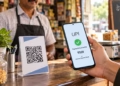










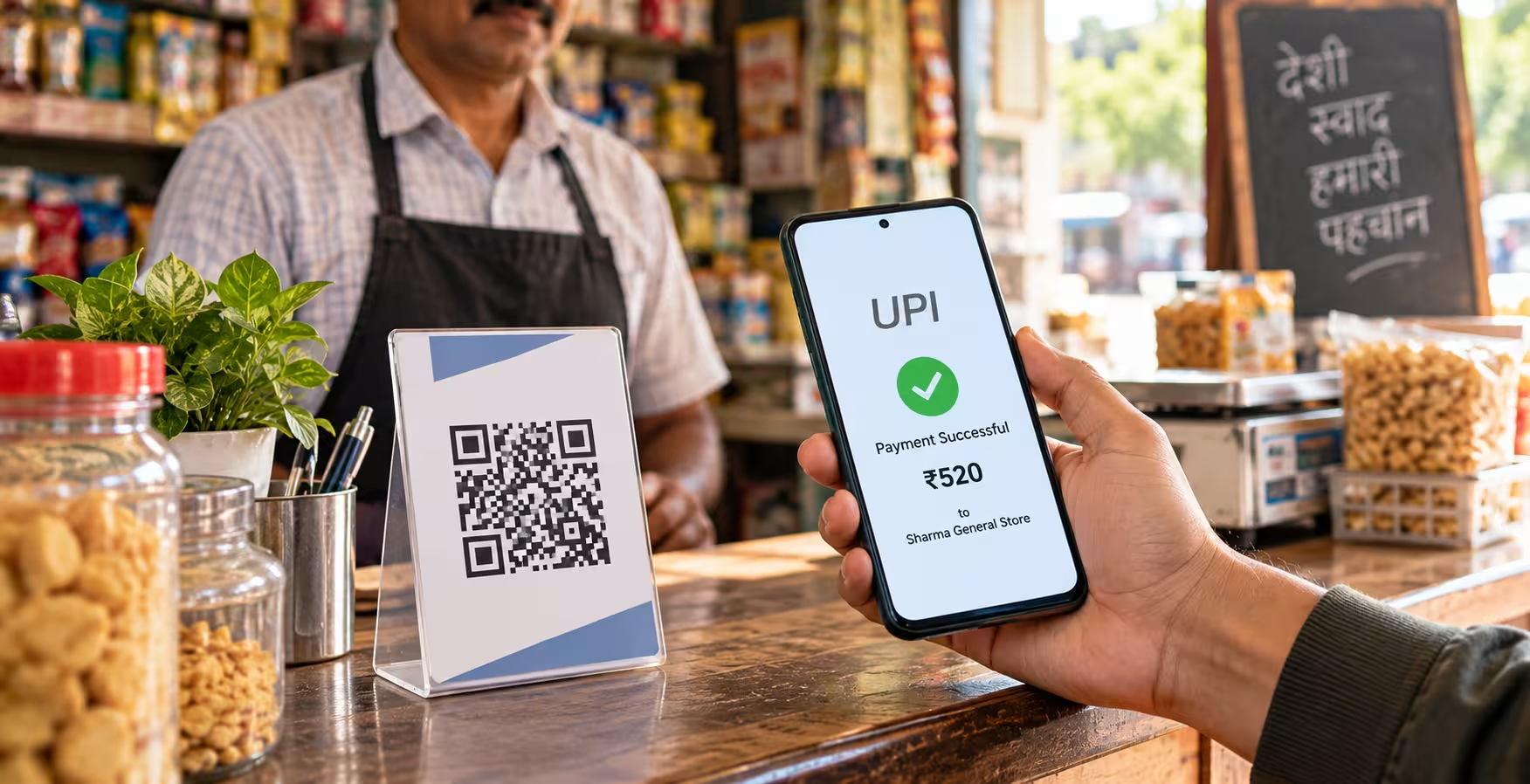
UPI charges above 2000 rupees will take effect from October 15, 2026, after the National Payments Corporation of India (NPCI) announced a 0.4 per cent merchant discount rate (MDR) on person-to-merchant payments crossing that threshold — though ordinary consumers will not pay anything extra.
What NPCI Announced
The new fee structure was decided by the UPI and Services Steering Committee, headed by NPCI, which includes 22 members spanning banks, payment players and industry bodies such as the Payments Council of India and the Indian Banks’ Association.
Under the framework, a 0.4 per cent MDR will apply to person-to-merchant (P2M) UPI transactions above ₹2,000. The fee is capped at ₹300 for transactions of ₹75,000 or more, meaning very large payments will not attract proportionally higher charges.
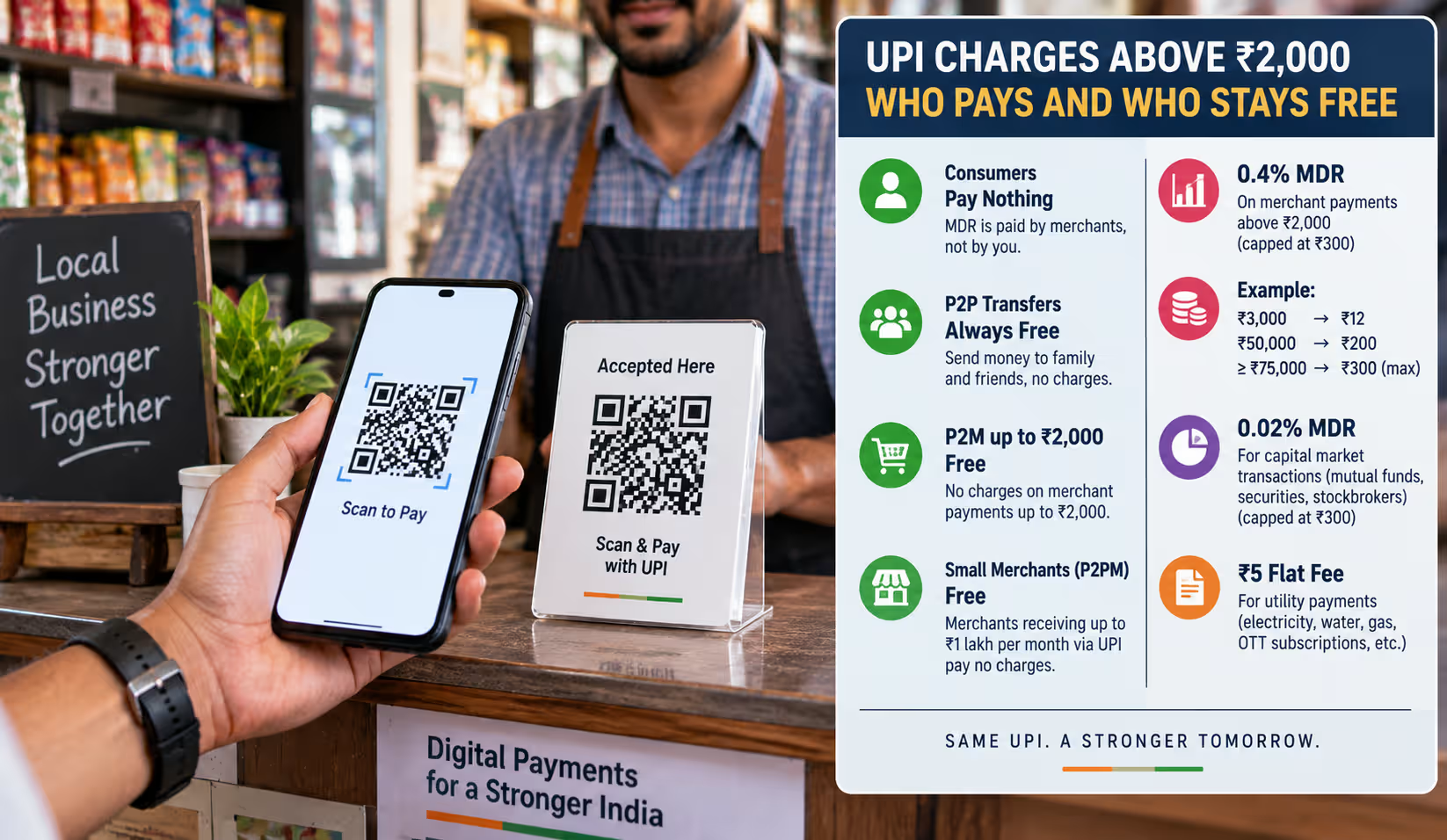
UPI Charges Above 2000: Who Pays And Who Stays Free
The most important clarification from NPCI is that consumers will not be charged. The MDR is paid by merchants to their acquiring banks, not by the person making the payment.
Several categories remain completely free of any charge: P2M transactions up to ₹2,000; peer-to-peer (P2P) transfers between family and friends, regardless of amount; and payments to small vendors classified as P2PM — merchants receiving up to ₹1 lakh per month through UPI, a category that particularly benefits businesses in rural and semi-urban areas.
NPCI also confirmed that UPI app providers will be prohibited from imposing platform fees or any other charges on customers for UPI transactions, stating that individual account holders can continue using UPI applications for all routine, daily expenses without worrying about any charges.
How The Fee Works In Practice
MDR calculations follow a predictable formula based on transaction value. For a ₹3,000 purchase, the 0.4 per cent rate results in a ₹12 fee paid by the merchant to its acquiring bank. For a ₹50,000 purchase, the same rate equals ₹200. Once a transaction crosses ₹75,000, the ₹300 cap kicks in, keeping costs manageable for high-value purchases.
Special Rates For Certain Categories
Capital market transactions — including payments towards mutual funds, securities, stockbrokers and dealers — will attract a nominal 0.02 per cent MDR, capped at ₹300.
For utility payments, NPCI has set a flat fee of ₹5 regardless of transaction amount. Explaining the logic, NPCI said a flat-rate model prevents cost escalations in critical public services, utility bill collection and thin-margin sectors like fuel retail, ensuring essential consumer services remain low-cost and digitally efficient. This covers recurring payments such as monthly utility bills, OTT streaming subscriptions and recurring investments.
Who Stands To Gain
Banks, along with UPI payment apps such as PhonePe, Google Pay and Paytm, are expected to be among the biggest beneficiaries of the new MDR regime, as fees will be distributed among participants in the payments chain. Recipients include the issuing or remitter bank holding the customer’s account, the acquiring bank that onboards the merchant, the payment service provider bank, and the UPI app itself. Payment aggregators are paid from the acquiring side.
Background: A Decade Of Free UPI
MDR on P2M UPI transactions was removed in January 2020, making the platform free for merchants and consumers alike. Since then, UPI has scaled dramatically — annual transaction volume expanded from around 2 crore transactions in FY 2016-17 to over 24,162 crore in FY 2025-26, with transaction value rising to roughly ₹314 lakh crore.
Industry estimates had suggested that a nominal MDR of 0.25 to 0.50 per cent on select higher-value merchant transactions could generate gross revenue of ₹15,000 crore to ₹30,000 crore annually, while keeping consumers and P2P payments free.
The October 15 implementation date gives acquiring banks, payment aggregators, fintech applications and corporate accounting platforms time to update their software engines and billing systems. One open question remains whether large merchants will absorb these costs themselves or pass them on to consumers through higher shelf prices.