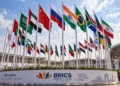
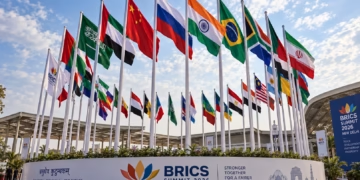







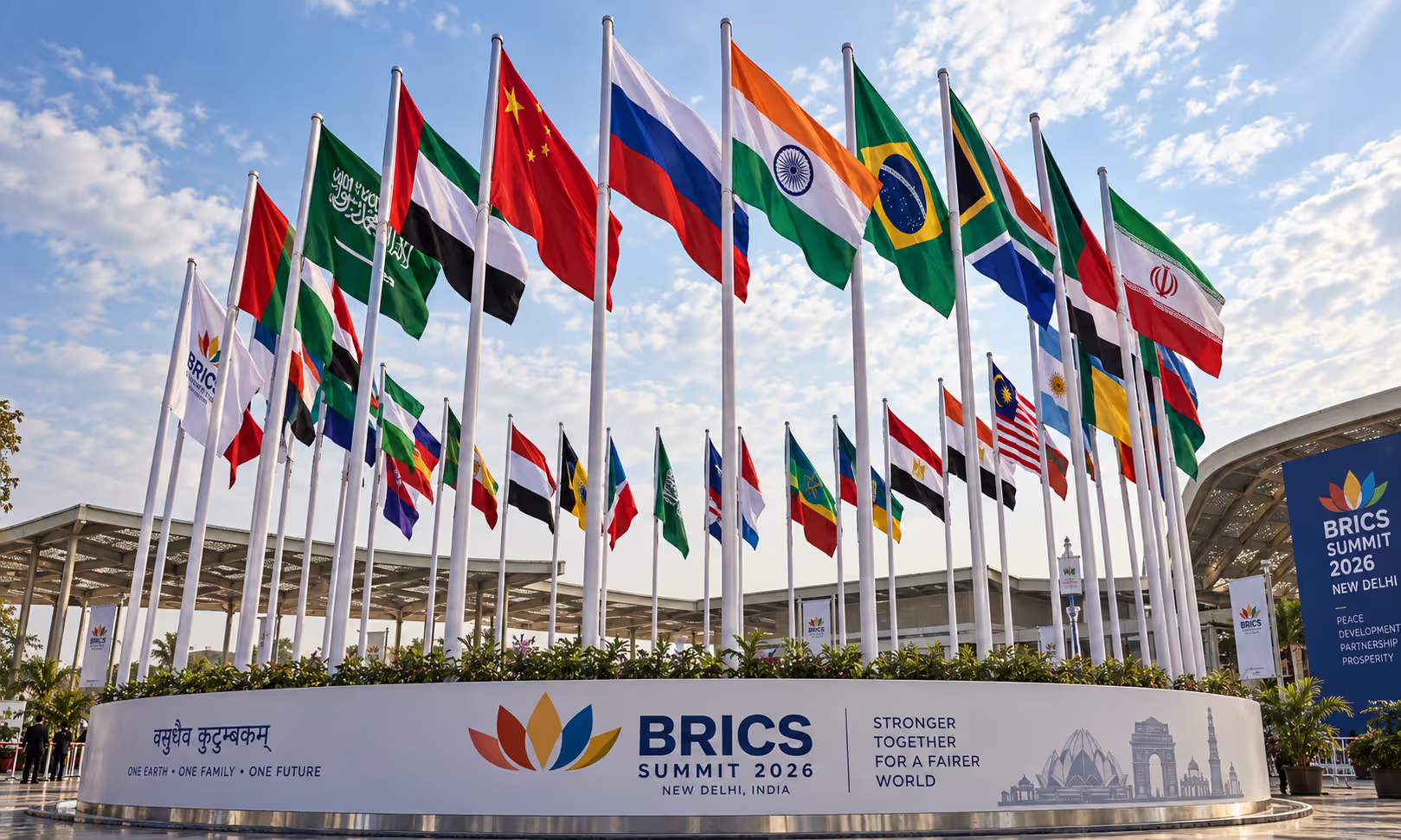
BRICS Summit 2026 declaration was adopted by consensus in New Delhi on Saturday, marking what officials called a major diplomatic victory for India as host, after negotiators overcame sharp differences between the United Arab Emirates and Iran over the ongoing West Asia conflict.
A Diplomatic Win for India
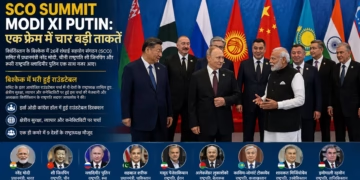
Prime Minister Narendra Modi announced the adoption of the declaration at the end of the opening day’s deliberations, in the presence of Chinese President Xi Jinping, Russian President Vladimir Putin, Iranian President Masoud Pezeshkian, Abu Dhabi Crown Prince Mohamed bin Zayed Al Nahyan, and other top leaders of the bloc. Leaders posed for the traditional family photograph during the summit at Bharat Mandapam.
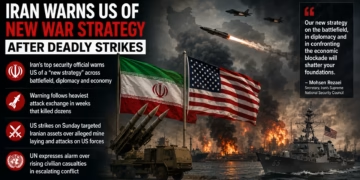
The joint declaration notably skipped any direct mention of the US strikes on Iran or Iran’s military attacks on several Gulf Arab nations, reflecting the delicate balancing act India had to manage as chair to secure consensus among member states with sharply opposing positions on the West Asia crisis.
Summit Theme and Final Session
The 18th BRICS Summit concludes Sunday with a final session titled “Resilience, Innovation, Cooperation and Sustainability: Shaping the Future for Inclusive Global Growth.” India adopted “Building for Resilience, Innovation, Cooperation and Sustainability” as the overarching theme for its 2026 BRICS presidency, its fourth time chairing the bloc after previously holding the role in 2012, 2016, and 2021.
Who Attended
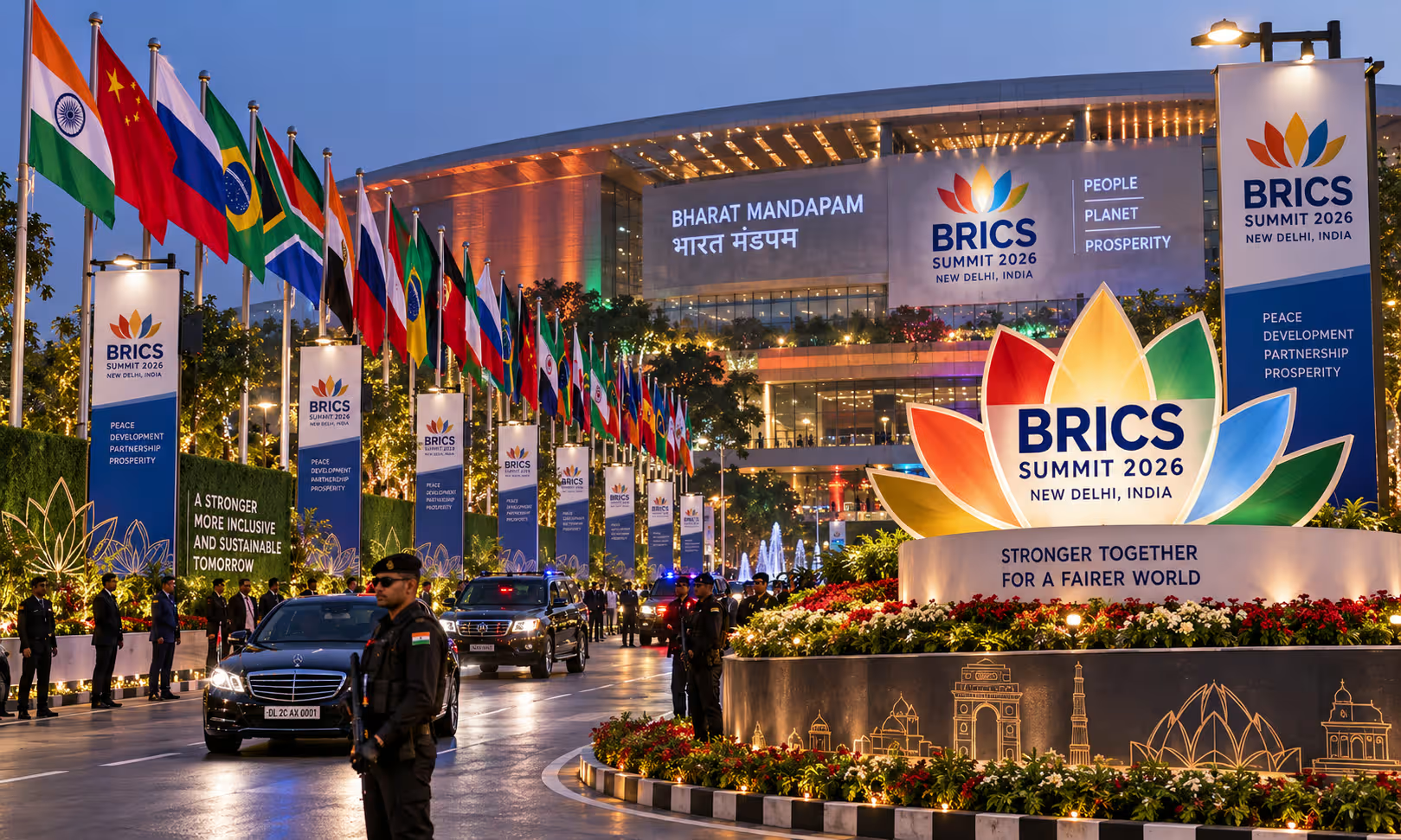
More than a dozen world leaders travelled to New Delhi for the two-day gathering, which is increasingly viewed as a counterweight to economic alliances dominated by wealthier Western nations. The city was decked out in BRICS-themed signage, with illuminated buildings and roundabouts marking the occasion, while roughly 30,000 additional security personnel were deployed and streets around leaders’ hotels closed to traffic.
Alongside the host nations of the original BRIC bloc, the summit included partner and full member states such as Belarus, Bolivia, Kazakhstan, Cuba, Malaysia, Nigeria, Thailand, Uganda, Uzbekistan, and Vietnam, which joined as BRICS partner countries last year.
Why the Timing Matters
Analysts noted the summit’s significance is heightened by its timing, arriving just ahead of the second China-US summit of the year, with Xi Jinping expected to meet US President Donald Trump for a state visit later this month. The gathering also unfolds against the backdrop of the US-Israel war on Iran, Russia’s ongoing war in Ukraine, and mounting global economic pressures — all factors that shaped discussions behind closed doors even where they did not appear explicitly in the final text.
Foreign policy experts have suggested the summit offers Russian President Putin a platform to showcase ties with leading Global South nations amid strained relations with the West, while also giving Russia and China an opportunity to court countries seeking to hedge against unpredictable US trade and security policy.
What Comes Next
With the declaration now adopted, attention turns to Sunday’s closing session, where leaders are expected to outline concrete next steps on economic cooperation, trade facilitation, and coordination among BRICS’s expanded membership. India’s ability to hold the bloc together despite competing regional interests is likely to be viewed as a defining feature of its 2026 chairmanship.