












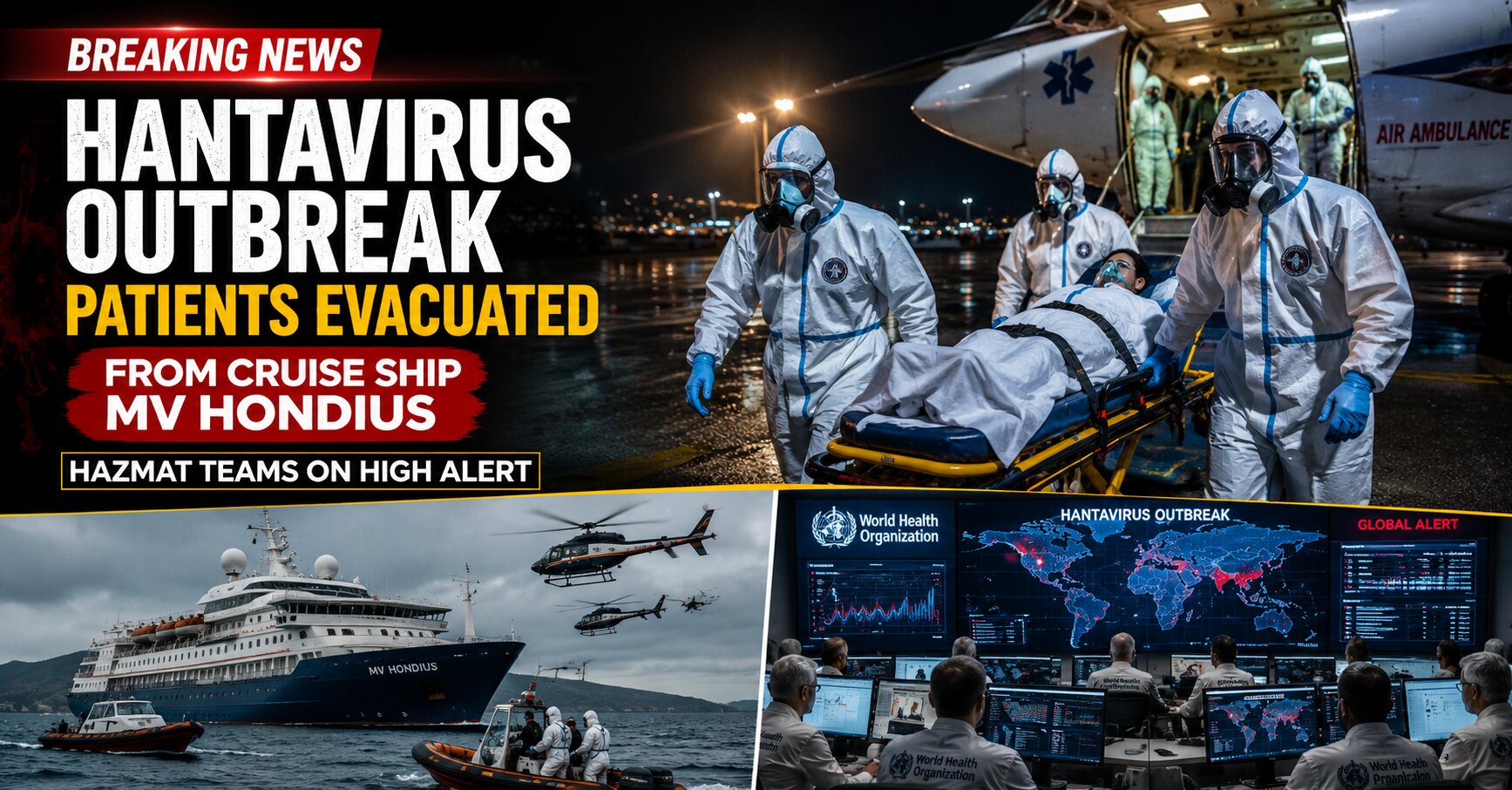
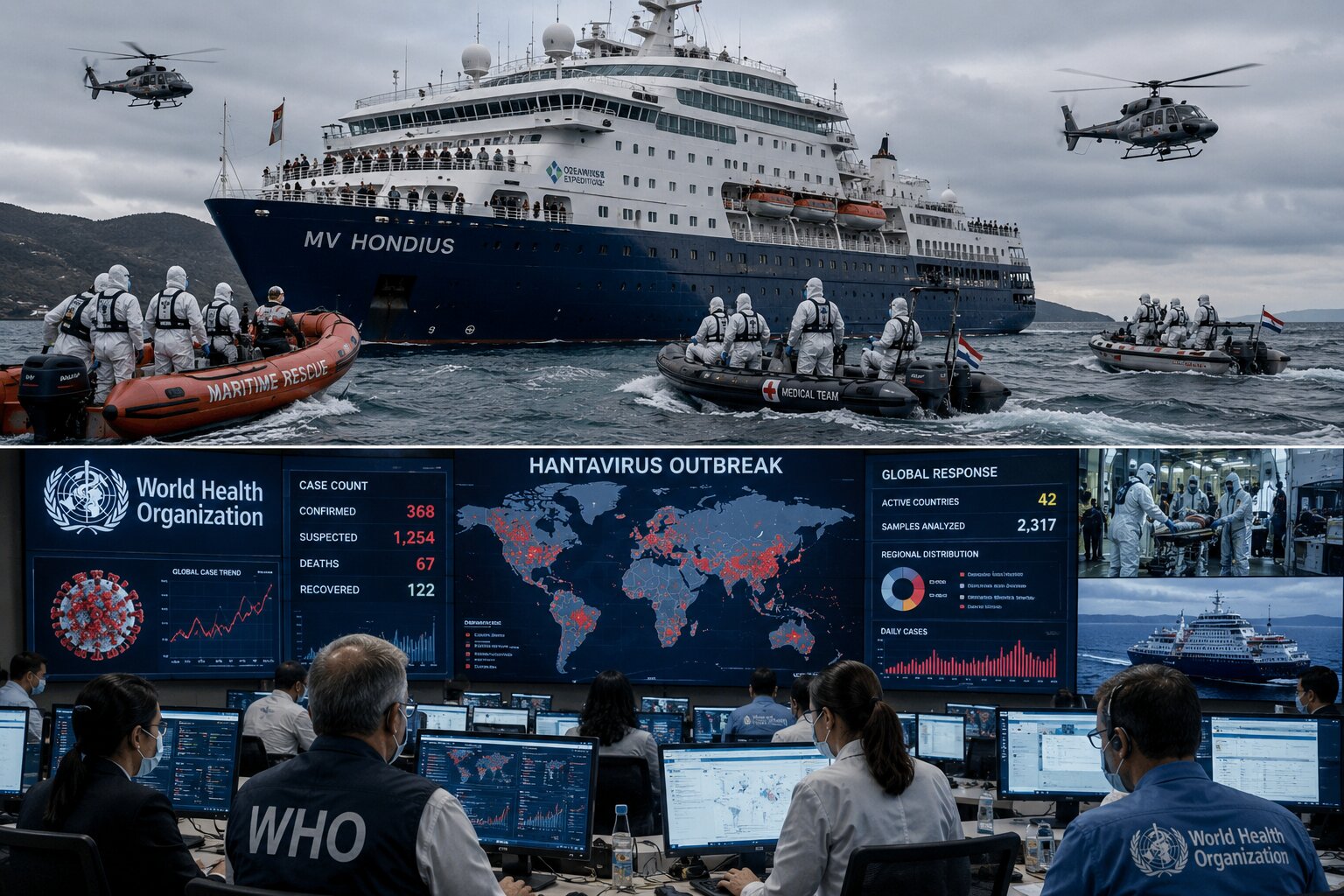
Medical teams wearing full hazmat suits evacuated suspected hantavirus patients from the cruise ship MV Hondius this week as global health authorities intensified containment efforts linked to a rare outbreak of the Andes strain of hantavirus.
Videos and images circulating online showed healthcare workers in respirators, protective gowns and face shields escorting stretcher-bound patients into specialised air ambulances near Amsterdam and Cape Verde. The Dutch-flagged expedition vessel, carrying around 150 passengers and crew members, has become the centre of an international health emergency after multiple suspected infections and several reported deaths linked to the voyage.
According to the World Health Organization (WHO), the outbreak is believed to involve the Andes strain of hantavirus, the only known strain capable of limited human-to-human transmission through close contact.
Why Authorities Used Hazmat Suits
Hantavirus pulmonary syndrome is generally transmitted through exposure to infected rodent urine, saliva or droppings. However, the Andes strain previously detected in parts of Argentina and Chile has shown limited person-to-person spread in rare cases.
Because the exact transmission chain aboard the ship remains unclear, medical evacuation teams adopted enhanced safety measures including respirators, impermeable gowns, gloves and eye protection during patient transport.
WHO officials stressed that the precautions are preventive measures and do not indicate widespread airborne transmission similar to Covid-19.
Emergency Response Intensifies
Three individuals, including the ship’s doctor and crew members, were evacuated after developing severe symptoms. Some patients were transferred to specialist hospitals in Europe using medically equipped aircraft.
Passengers aboard MV Hondius were temporarily confined to cabins while health teams carried out screening, monitoring and contact tracing operations.
Spain agreed to receive the ship at the Canary Islands under strict monitoring after requests from WHO and European health authorities. Officials stated that specialised isolation and medical facilities would be used during passenger disembarkation.
Why Cruise Ships Raise Concern
Experts say cruise ships create complex outbreak conditions because passengers remain in enclosed environments for extended periods while sharing dining areas and ventilation systems.
The vessel departed from Ushuaia, Argentina, in April before travelling through remote South Atlantic regions. Investigators now believe the virus may have been introduced onboard before embarkation.
Authorities in multiple countries are conducting laboratory testing, genomic sequencing and surveillance to determine whether onboard human transmission occurred.
What Happens Next
Once the ship docks in Spain, passengers are expected to undergo medical screening, testing and supervised repatriation procedures.
WHO stated that investigations remain ongoing and that genomic analysis will help determine whether infections resulted from environmental exposure or limited human transmission.
The incident has become one of the most closely watched infectious disease responses of 2026 and is expected to provide major lessons for future outbreak management aboard cruise ships.