









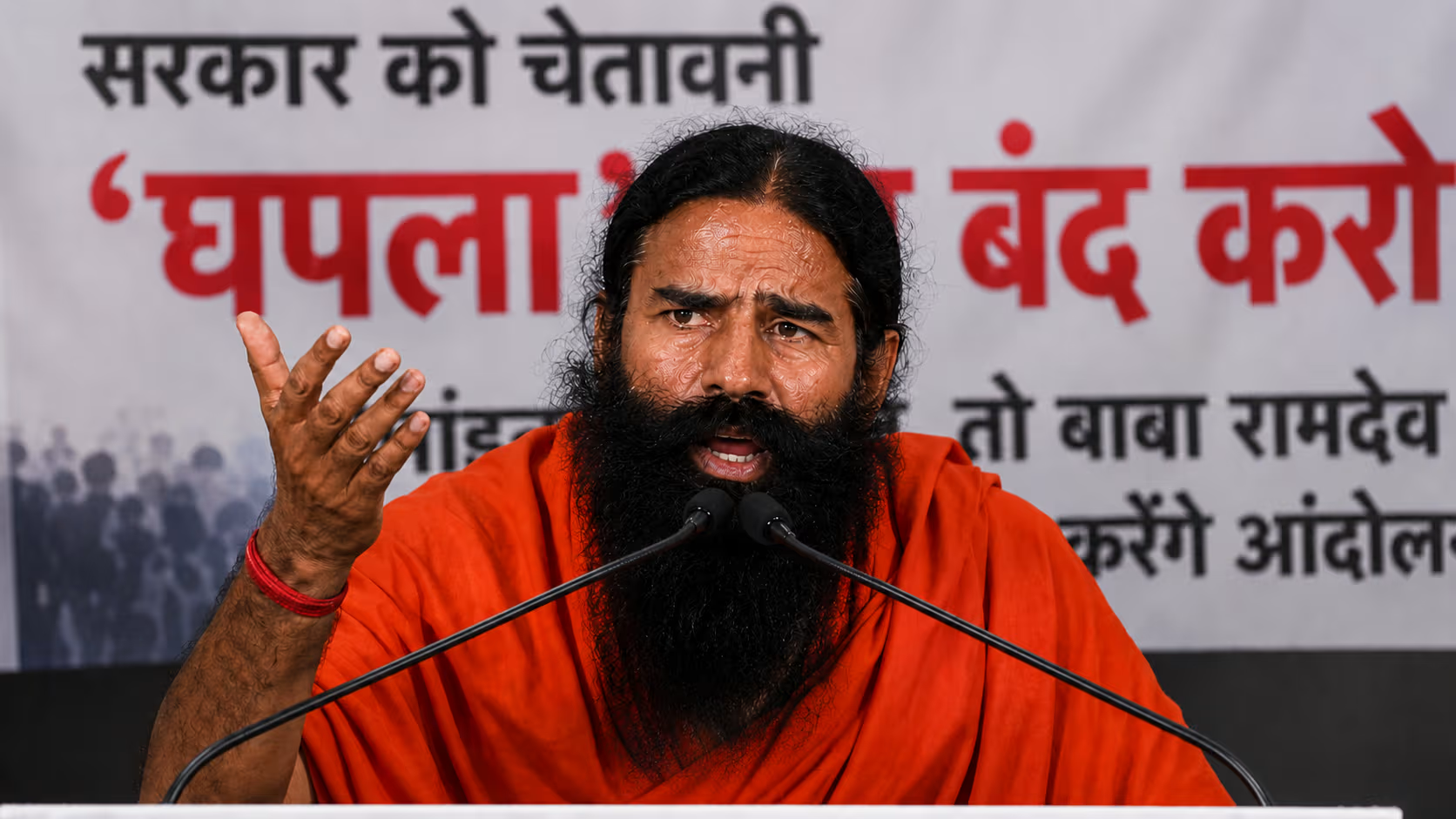
Baba Ramdev warns Modi govt over what he called widespread “ghapla” (scams) in India’s education and government recruitment systems, cautioning that student protests could intensify — and that he himself may return to the streets — if the Centre fails to act.
What Ramdev Said
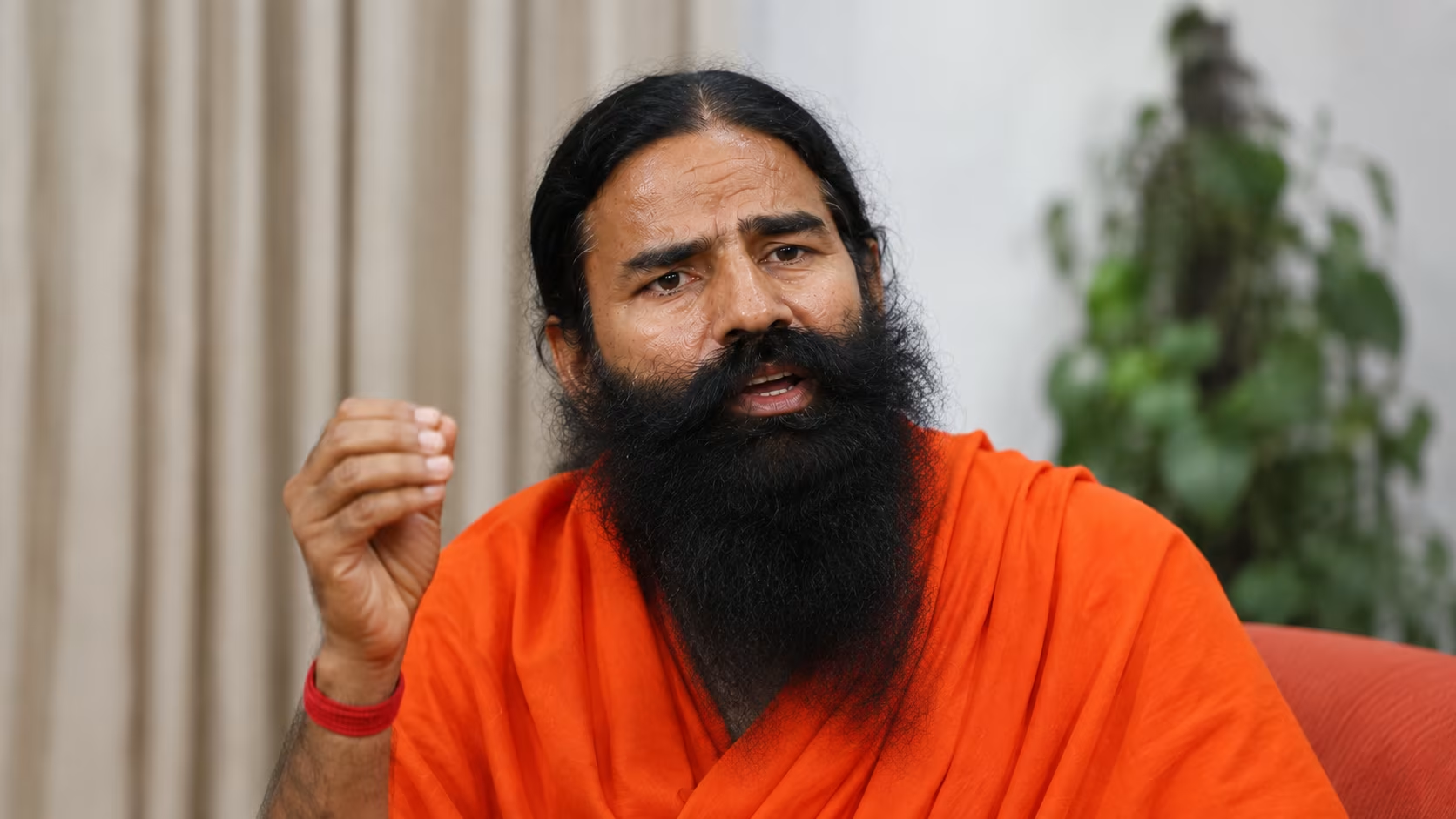
Speaking to reporters at Patanjali Yogpeeth in Haridwar on India’s 80th Independence Day, Ramdev said students across the country were raising legitimate concerns, ranging from inadequate facilities in schools and colleges to alleged cheating and question-paper leaks in examinations. He also alleged that corruption and money power were influencing selections for government jobs.
“Kindly fix this, or else Baba Ramdev will have to protest again,” he warned, invoking his own history of anti-corruption activism — a direct reference to his 2011 agitation at Delhi’s Ramlila Maidan, which ended when police detained him and his supporters as they attempted to march toward Parliament.
Specific Allegations Raised
Ramdev painted a detailed picture of dysfunction in the education system, saying government schools and colleges continue to face shortages of teachers and basic amenities such as electricity, water, and toilets. “If we have teachers, we don’t have books. If we have books, we don’t have teachers,” he said.
His sharpest criticism was reserved for government job interviews, where he alleged that corruption and money power determine outcomes far more than merit. Ramdev claimed that “90-99 percent” of factors influencing selection have nothing to do with candidates’ qualifications, and alleged that applicants are sometimes asked for bribes running into “Rs 25-50 lakh per crore” during the recruitment process. These claims were not accompanied by specific evidence or details of particular cases.
A Call for Peaceful Protest
Despite backing the students’ underlying grievances, Ramdev was careful to distance himself from any endorsement of violence. “I don’t support anarchy and lawlessness under the garb of protests. But there is no denying that there are a lot of ghapla in the country,” he said, urging Gen Z protesters to keep their demonstrations within constitutional and democratic boundaries.
He argued that young people should assert their rights without resorting to violence, framing genuine independence as having “our own system” across education, healthcare, and the economy.
A Broader Message on Unity
Beyond the specific allegations, Ramdev used the address to warn against what he described as a growing climate of hatred in Indian public life. He said people from different castes and communities had increasingly begun standing against one another, name-checking groups including Brahmin, Kshatriya, Vaishya, Shudra, Dalit, Adivasi, Hindu, Muslim, Sikh, Christian, Jain, and Buddhist communities.
“We have to break all these walls of hatred in the country,” he said, arguing that divisions based on politics, caste, class, and community were unbefitting of citizens in an independent nation.
Why This Warning Carries Weight
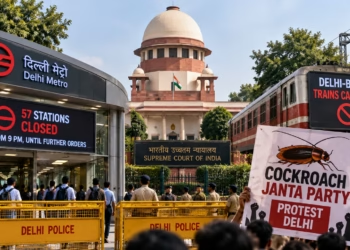
Ramdev’s intervention comes at a politically sensitive moment, with student protests over alleged recruitment irregularities already active in several states — including Jharkhand, where sustained protests recently forced the state government to cancel its JSSC-CGL examination entirely. His history of large-scale anti-corruption mobilisation, dating back to the 2011 Ramlila Maidan protest, adds particular weight to his warning that similar unrest could resurface at a national level if the Centre doesn’t respond.
Whether the Modi government will directly address Ramdev’s allegations remains to be seen, but his remarks add a prominent, non-political voice to a wider national conversation already building around exam integrity and recruitment transparency.