












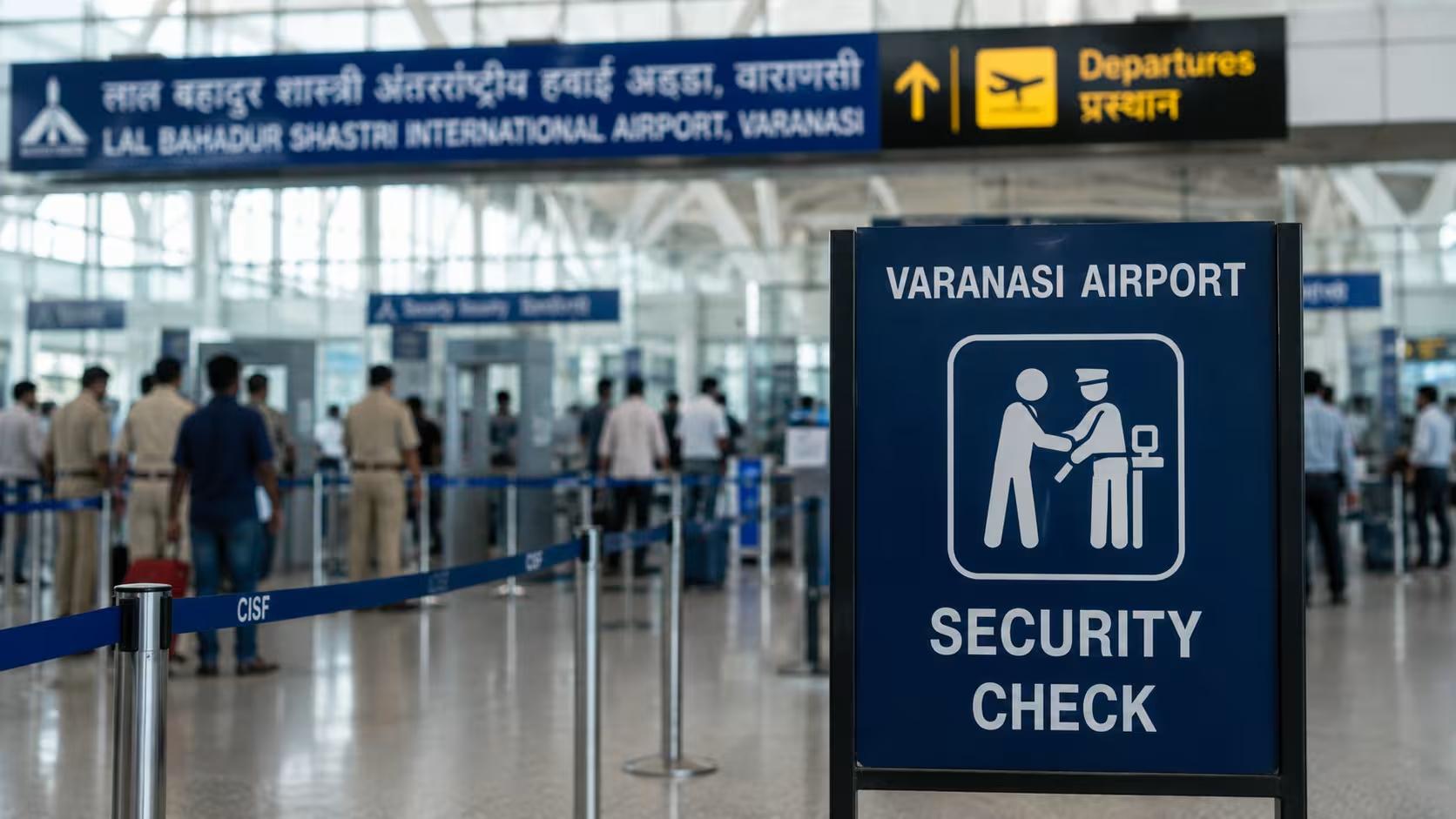
Varanasi airport gun fires accidentally during a routine pre-boarding security check on Sunday, injuring two screening personnel at Lal Bahadur Shastri International Airport in Uttar Pradesh. The incident occurred around 9:30 am when a passenger’s licensed pistol discharged while being inspected.
What Happened at the Screening Counter
The passenger, identified as Kamlesh Rai, a resident of Azamgarh, had arrived at the airport with his wife to board Air India Express flight IX-1810 to Mumbai. As required under aviation regulations, Rai had declared his licensed 7.62mm pistol along with 21 live cartridges at the airline’s check-in counter before proceeding to the designated screening area.
During the mandatory inspection carried out by CISF personnel and airline staff, a round accidentally discharged from the pistol. The bullet first struck the ground before ricocheting and hitting two nearby screening staff — a woman who suffered an injury to her leg, and a man who sustained a wound to his thumb.

Officials Respond, Staff Hospitalised
Varanasi airport director Puneet Gupta confirmed the sequence of events in an official statement, noting that both injured staff members — identified as Rohit Raj and Suman Kumari — were immediately taken to New Laxmi Trauma Centre for treatment. Officials said both are currently in stable condition.
Deputy Commissioner of Police (Gomti Zone) Neetu Kadyan said police received information about the firing around 10 am and promptly dispatched Phulpur police to the scene. She confirmed that Rai’s pistol carried an all-India permit and had been properly declared before the security check began.
Investigation Underway
The passenger was detained following the incident, and local police, alongside the Bureau of Civil Aviation Security (BCAS), have launched an investigation into how the firearm discharged during what is meant to be a controlled verification process. The Ministry of Civil Aviation confirmed the matter is being examined, with further action to be taken based on the findings.
The inquiry is expected to focus on whether standard procedures for handling licensed firearms at security checkpoints were properly followed by both the passenger and the screening staff.
What Are the Rules for Carrying Firearms on Domestic Flights in India?
The incident has renewed attention on how licensed weapons are handled during airport security procedures. Under India’s aviation security norms, passengers are permitted to carry a licensed firearm on domestic flights, but only under strict conditions laid down by the Bureau of Civil Aviation Security (BCAS) and individual airline policies.
A passenger must declare the weapon at the check-in counter before proceeding through security, along with valid arms license documentation. The firearm is then required to be unloaded, with ammunition carried separately in secured, checked baggage — never in cabin luggage. Airlines typically limit the quantity of ammunition a passenger may carry, and the weapon is usually packed in a locked hard case that is verified by CISF personnel before being cleared for the cargo hold.
The screening and verification process, as seen in Sunday’s incident, requires the firearm to be physically inspected by security staff to confirm it matches the declared documentation and is safely unloaded before packing. It is during this manual verification stage — rather than during boarding itself — that most reported mishandling incidents tend to occur.
Aviation safety experts note that incidents like the one at Varanasi typically prompt airports to review screening protocols, including additional training for staff handling firearm verification and clearer guidelines for passengers travelling with declared weapons.
Airport Background
Lal Bahadur Shastri International Airport, renamed in 2005 after India’s former Prime Minister, is among the busiest airports in Uttar Pradesh and serves as a key gateway for domestic and international travellers visiting Varanasi. The airport regularly processes passengers travelling with declared firearms under India’s licensed weapons transport rules, which require documentation and supervised screening before such items can be checked in.