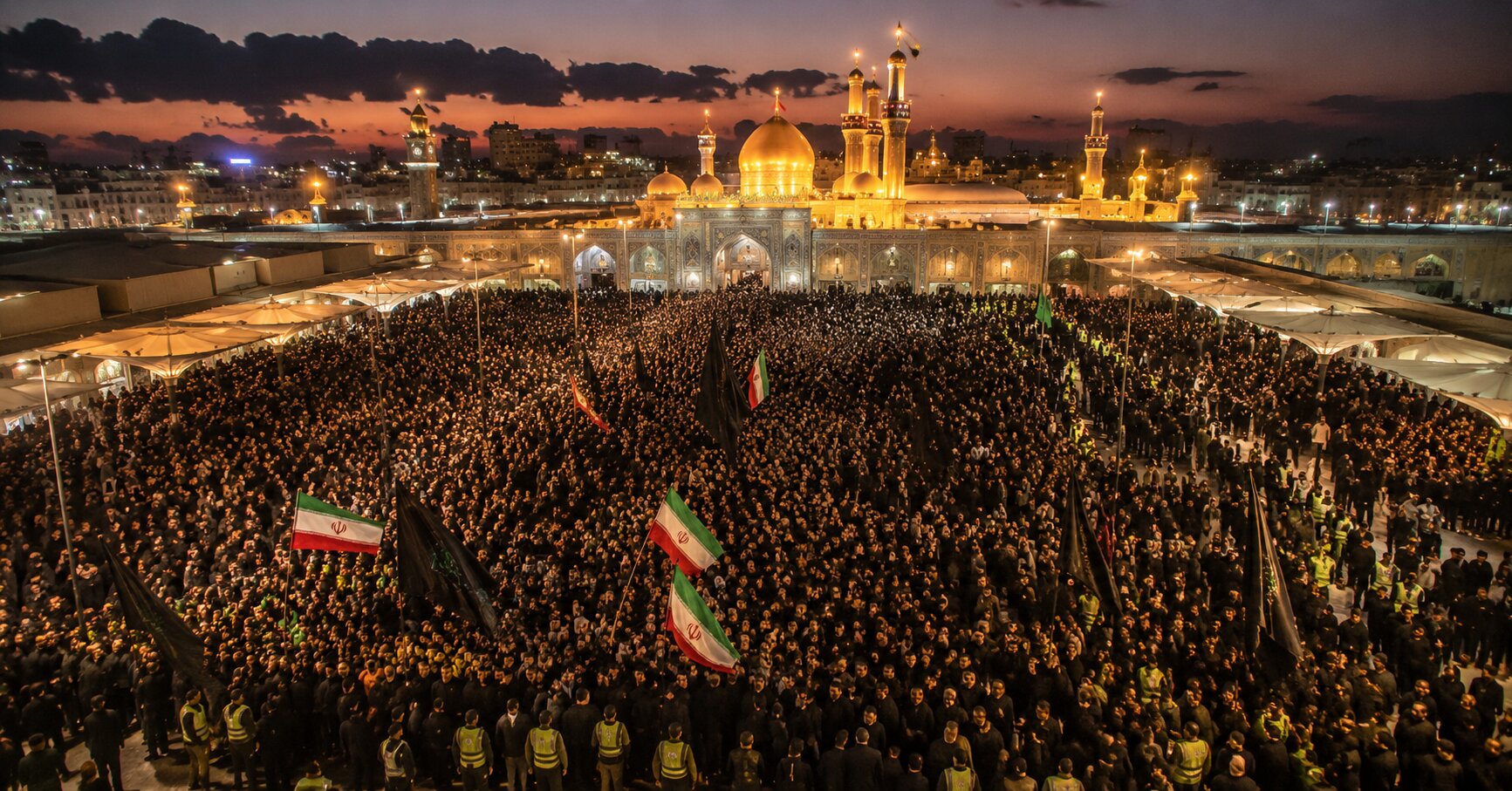








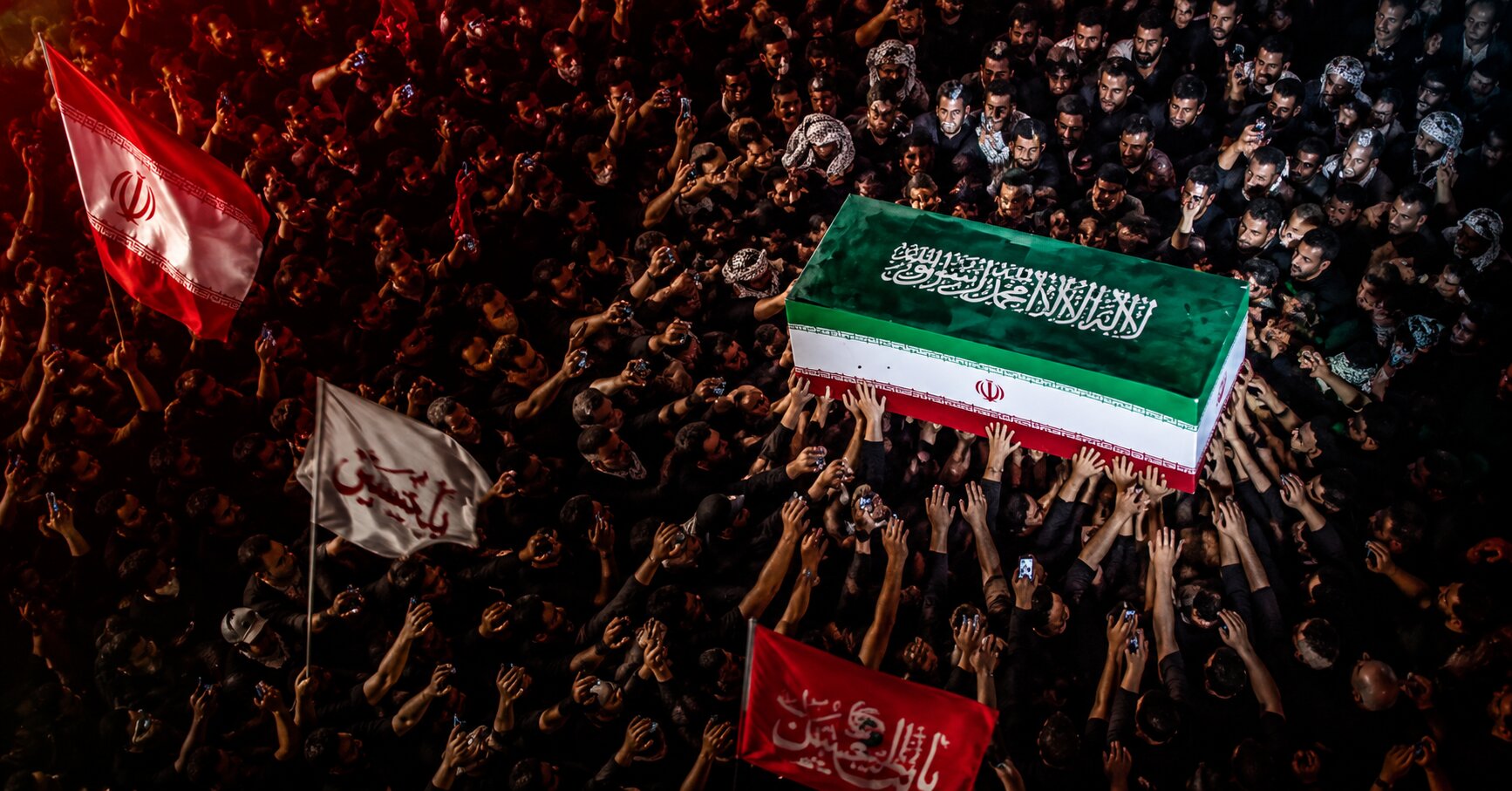
The Khamenei funeral Iraq Mashhad processions saw such a massive turnout in Najaf and Karbala that organisers were forced to delay the final funeral procession in the Iranian holy city of Mashhad. The committee overseeing the burial of Iran’s late Supreme Leader, Ayatollah Ali Khamenei, said the procession has been pushed from 8 a.m. to 2 p.m. local time on Thursday because of the scale of the reception in Iraq.
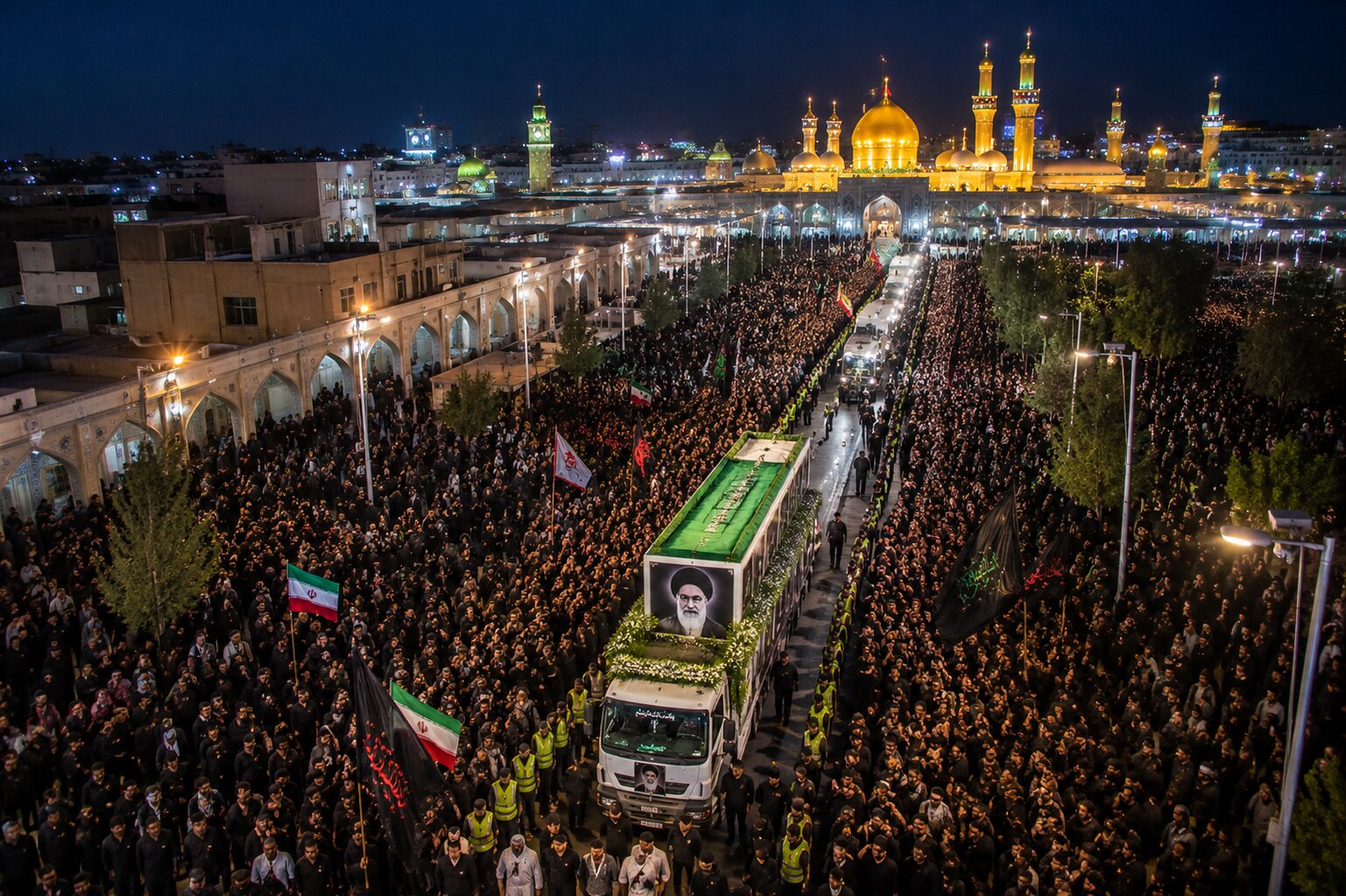
During the rescheduled event, Khamenei’s body will be carried along Imam Reza Street toward the shrine of the eighth Shia Imam, the committee added.
Khamenei was killed alongside several family members on February 28, the first day of a 40-day war involving the United States and Israel against Iran.
A week-long, multi-city farewell
The funeral proceedings began on Friday, with Khamenei’s body lying in state at Tehran’s Imam Khomeini Mosalla as foreign dignitaries and religious figures paid their respects. Public farewell events and prayers followed on Saturday and Sunday.
On Monday, large crowds packed the streets of Tehran as the funeral convoy moved through the capital, before the ceremony continued in the holy city of Qom on Tuesday. From there, the procession crossed into Iraq for farewell ceremonies in Najaf, home to the shrine of Imam Ali, and in Karbala, home to the shrines of Imam Hussein and his brother Abbas.
Millions turn out across Iraq
Early estimates from Iraqi media suggest more than 7 million people took part in the funeral processions across Najaf and Karbala combined. The flight carrying the bodies of Khamenei and his family members departed Najaf on Thursday morning, following a 24-hour procession across the two Iraqi cities that officials described as among the largest public gatherings the country has seen in years.
Iranian officials thank Iraq
IRGC Quds Force commander Brigadier General Esmail Qaani issued a message thanking the Iraqi people and government for what he called an extraordinary show of solidarity, describing the turnout as bringing together people across religious and ethnic lines — Shia, Sunni, Kurdish and Christian communities alongside clerics, tribal leaders and officials — to honour a man he said had dedicated his life to the wider Muslim community. He characterised the funeral as a display of unity within the Muslim world and a call for accountability over the killing.
Iranian Foreign Minister Abbas Araghchi also thanked Iraq’s government and its religious, tribal and security institutions for facilitating the ceremonies. He said the scale of the turnout and the hospitality shown reflected the depth of religious and cultural ties between the two countries, pointing to their shared reverence for Imam Hussein as a unifying thread. Araghchi described the events in Najaf and Karbala as marking a significant moment in Iran-Iraq relations, built on shared religious tradition and longstanding friendship between the two peoples.
Why the Iraq leg matters
Najaf and Karbala hold deep religious significance for Shia Muslims worldwide, making Iraq’s participation in the funeral proceedings symbolically important beyond Iran’s borders. The scale of the crowds — and the diversity of communities represented, according to Iranian officials — was framed by Tehran as evidence of broad regional solidarity following Khamenei’s killing.