










Iran Culture House New Delhi seminar brought together diplomats, scholars, religious leaders and intellectuals on Wednesday to mark the 37th death anniversary of Imam Khomeini, founder of the Islamic Revolution, and to honour the memory of Imam Shaheed Ayatollah Syed Ali Khamenei.
The event, titled “Principles of Progress and Development in the Thought of Imam Khomeini and Imam Shaheed,” was organised by the Iran Culture House New Delhi and drew a large gathering from India’s academic, cultural, religious and political circles.
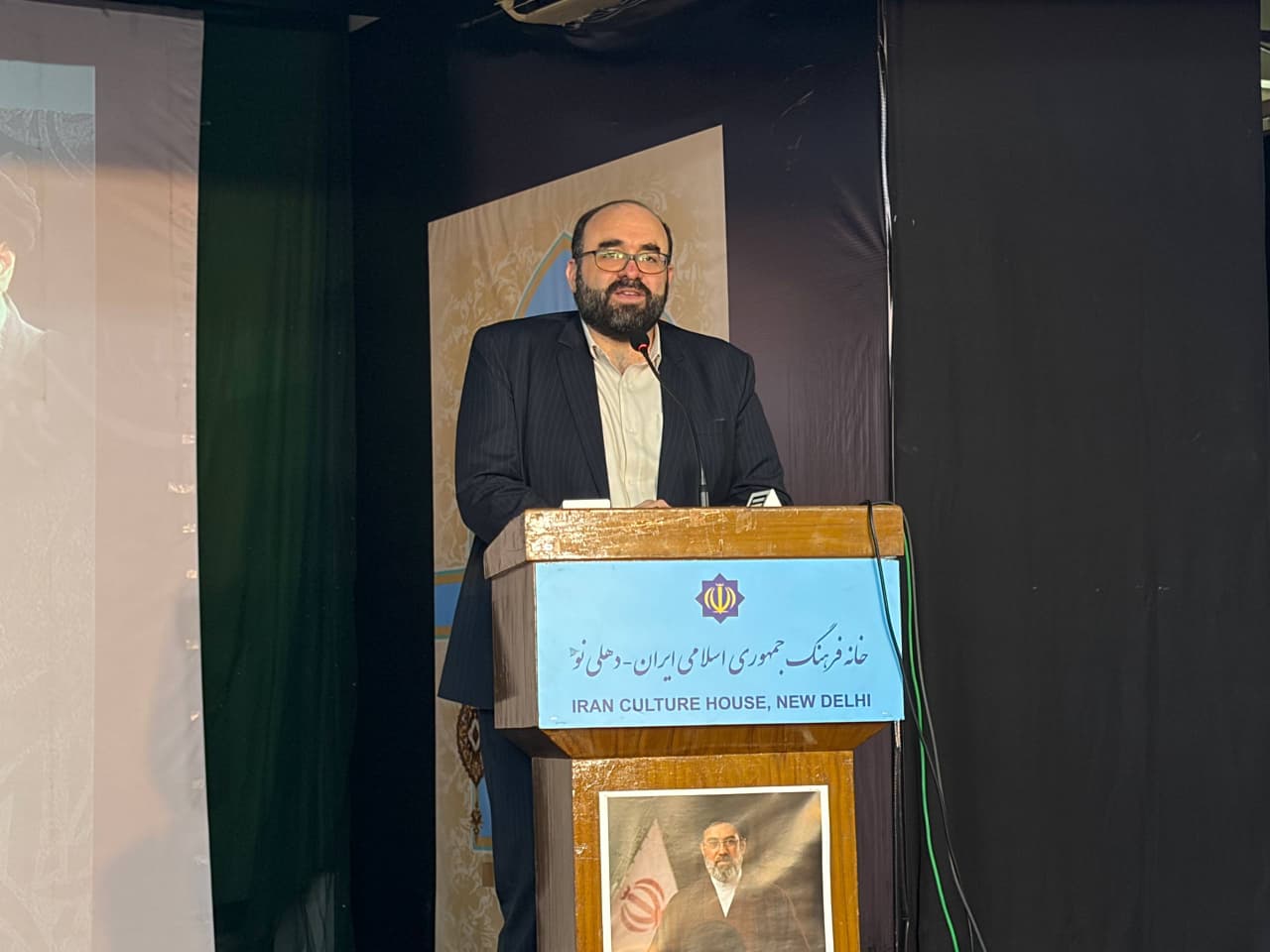
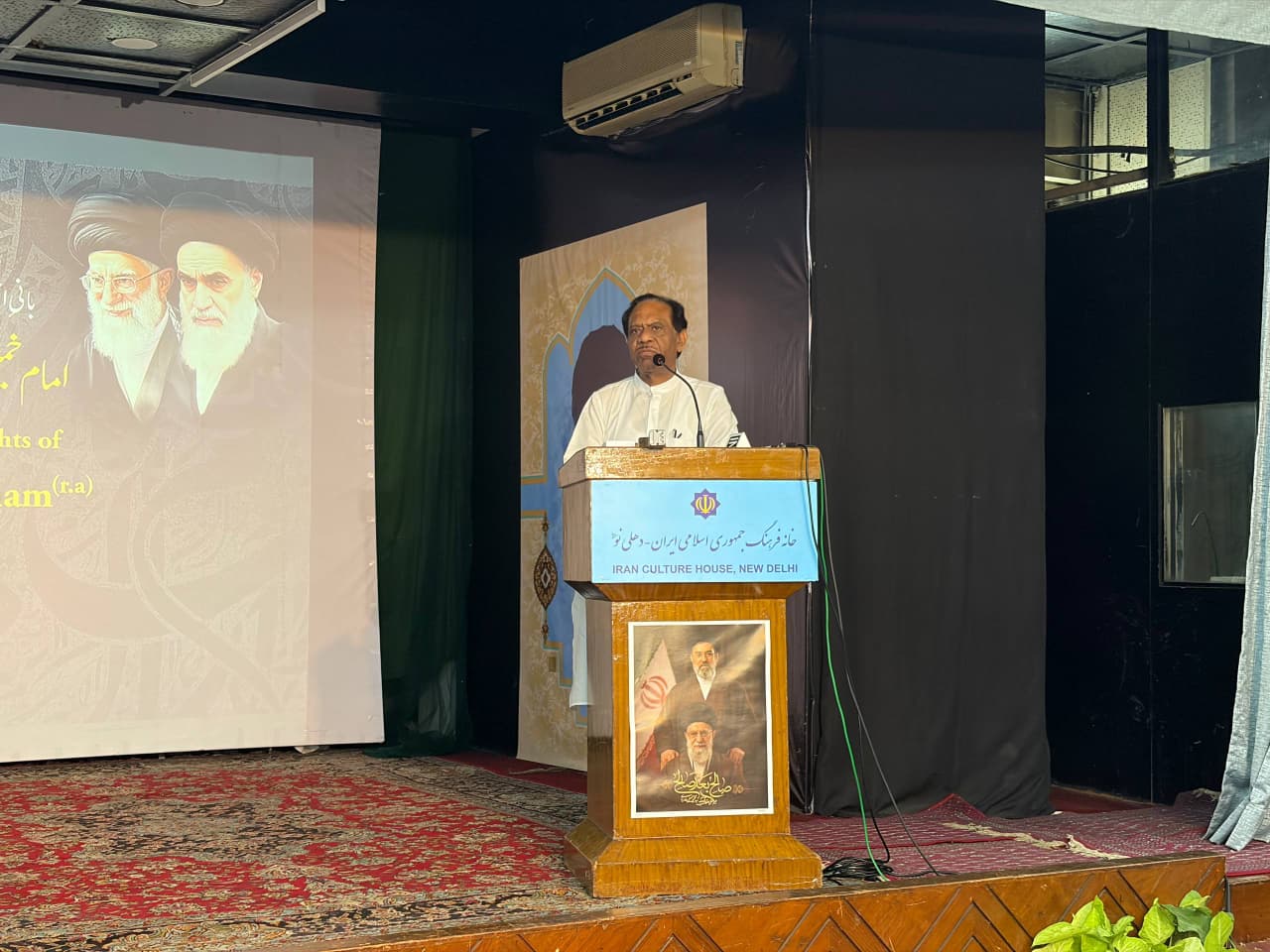
Distinguished attendees included the Ambassador of the Islamic Republic of Iran Dr. Fatah Ali, Cultural Counsellor Dr. Fariduddin Farid Asr, Deputy of the Office of the Representative of Wali Faqih in India Hujjat al-Islam Ziyaei Nia, Secretary of Jamaat-e-Islami Hind Maulana Mohammad Ahmad, Imam Juma of Masjid Bab al-Ilm Delhi Maulana Tasdiq Hussain, and journalist and political analyst Taslim Rehmani.
Seminar Opens With Quran Recitation and Poetic Tribute
The Iran Culture House New Delhi seminar began with a recitation of the Holy Quran by Dr. Ali Reza, followed by a naat — a poetic tribute in praise of the Prophet — presented by renowned poet Saleem Amrohvi. The event was hosted by Mahdi Baqirkhan, whose skilled anchoring kept the proceedings flowing smoothly throughout.
Iranian Cultural Counsellor: Resistance Is a Civilisational Strategy
In his keynote address, Cultural Counsellor Dr. Fariduddin Farid Asr paid tribute to both leaders and said that in recent months, the Iranian nation had once again demonstrated its unwavering commitment to the principles of the Islamic Revolution through unity, foresight and strong public participation.
He said certain elements had believed Iran’s system could be weakened by targeting its senior leadership — but reality had proven that the Islamic Republic of Iran possesses extraordinary stability, built on the foundation of people’s power, strong institutions and inspiring leadership.
Drawing a parallel with India, Dr. Farid Asr described Iran not merely as a country but as a great and ancient civilisation with thousands of years of cultural history — one that has always succeeded in preserving its Iranian Islamic identity, just as India has preserved its rich civilisational heritage.
He emphasised that progress in the thought of Imam Khomeini and Imam Shaheed is not limited to economic or material advancement alone — it encompasses spiritual, moral, cultural, scientific and social development. He stressed that political, cultural and economic sovereignty is essential for sustainable progress, and that no nation can achieve true dignity without it.
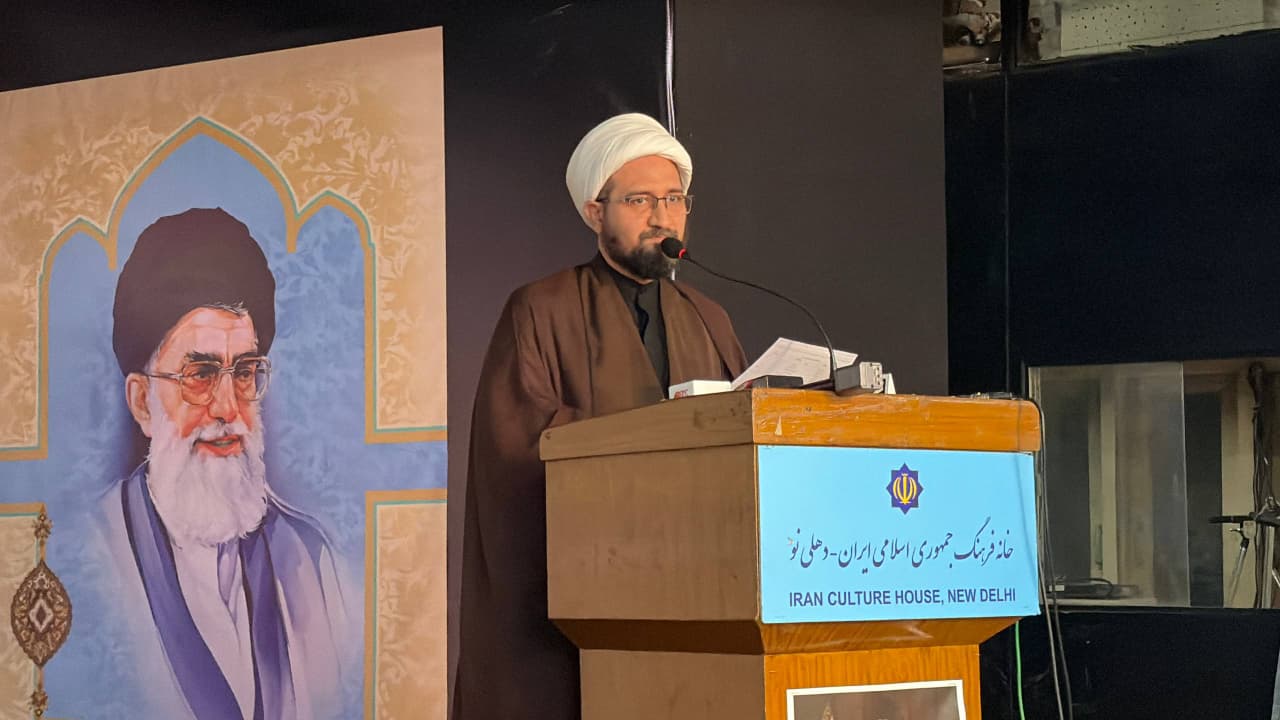
Dr. Farid Asr described “resistance” as the foundational pillar of both leaders’ ideology — making clear that resistance is not merely a military concept but a civilisational strategy that enables nations to achieve progress and self-confidence across scholarly, cultural, economic and social domains.
Indian Scholars Speak on Social Justice and Revolutionary Thought
Maulana Tasdiq Hussain, Imam Juma of Masjid Bab al-Ilm Okhla Delhi, spoke on the importance of social justice, emphasising that the defining characteristic of an Islamic society is respect for human rights and support for the marginalised. He said that in Islam, a true believer is one from whose hands and tongue all human beings remain safe — regardless of their religion or faith.
Hujjat al-Islam Ziyaei Nia said that in the vision of Imam Khomeini and the Supreme Leader of the Revolution, the foundational goals of the Islamic Revolution rest on social justice, progress and spirituality. He stressed that backwardness in scientific, technological and economic fields is unworthy of an Islamic society, and that realistic planning and sound analysis are essential for genuine development.
Maulana Mohammad Ahmad, Secretary of Jamaat-e-Islami Hind, stated that the Islamic Revolution of Iran holds a unique place among contemporary revolutions. He said Imam Khomeini had courageously and with great foresight exposed the true nature of the global arrogance system, and that time had proven the accuracy of his analyses and warnings. Support for the oppressed and the deprived, he added, is one of the key reasons behind the enduring strength of the Islamic Revolution.
Taslim Rehmani and Iranian Ambassador Address the Gathering
Journalist and political analyst Taslim Rehmani praised the historic roles of both Imam Khomeini and Imam Shaheed, saying that over more than four decades, both leaders had played a central role in protecting the Islamic Revolution, guiding it and transmitting its message to new generations.
Ambassador of Iran Dr. Fatah Ali spoke about the deep historical and cultural ties between Iran and India, noting that Imam Khomeini and Imam Shaheed had placed fundamental importance on rational argument, moral counsel and logical dialogue in social and political life.
He described the Supreme Leader’s political thought as grounded in wisdom, ethics, rationality and a deep understanding of social realities — which is why successive generations across the world continue to be inspired by it.
The Ambassador described national unity as one of the greatest assets of the Iranian nation, saying that despite various pressures and challenges, the Iranian people remain united around the Islamic Revolution and its principles, determined to defend their freedom, national dignity and identity.
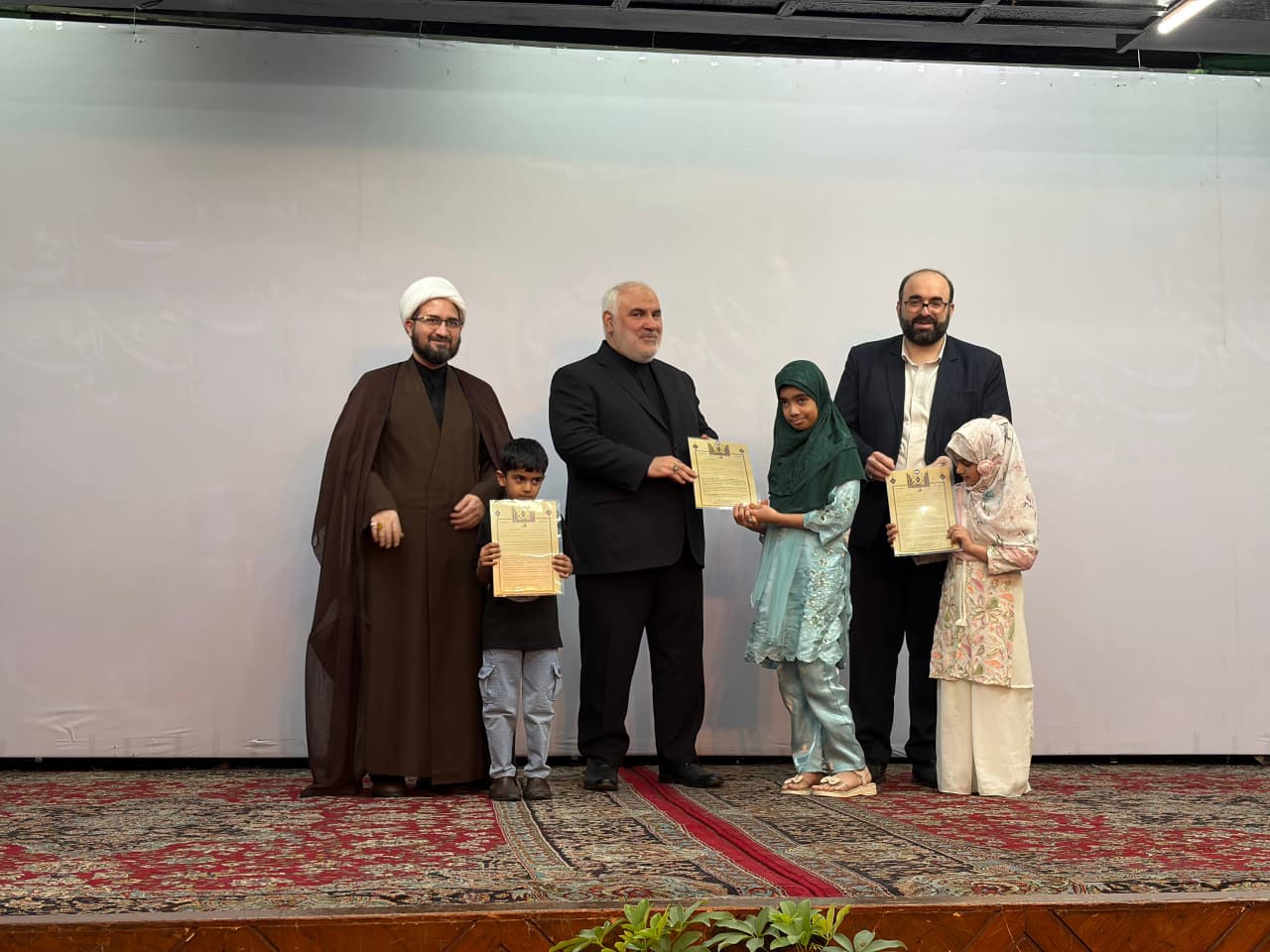
Art Competition Winners Honoured at Iran Culture House New Delhi Seminar
The Iran Culture House New Delhi seminar concluded with the announcement of winners from two painting competitions — titled “Rahbar-e-Shaheed” and “Madrasa-e-Minab” — held in memory of Imam Shaheed Ayatollah Syed Ali Khamenei’s martyrdom and the tragic bombing of Madrasa Minab.
Students from primary and secondary schools across India participated enthusiastically, with over 200 artworks submitted. Selected works were later exhibited at the Iranian Embassy and at various cultural events, where they received widespread appreciation from students, teachers, parents and art lovers alike.
The seminar concluded with speakers unanimously affirming that the teachings of these two leaders continue to serve as a source of guidance for freedom-loving people across the world.